Our Academic Approach
At Jubilee School, our curriculum is rooted in children’s natural curiosity, creativity, and desire to make sense of the world around them. We believe that learning should be joyful, meaningful, and connected to students’ lived experiences. Across all subjects—from language arts and math to social studies, science, the arts, and block building—students engage in hands-on exploration, thoughtful inquiry, and collaborative discovery. Our teachers guide learning through a balance of play, direct instruction, and rich, real-world investigations that help children develop strong academic foundations, social-emotional skills, and a deep sense of purpose and possibility. The result is a learning environment where students see themselves as capable thinkers, creators, and community members with the power to shape their world.
Language Arts
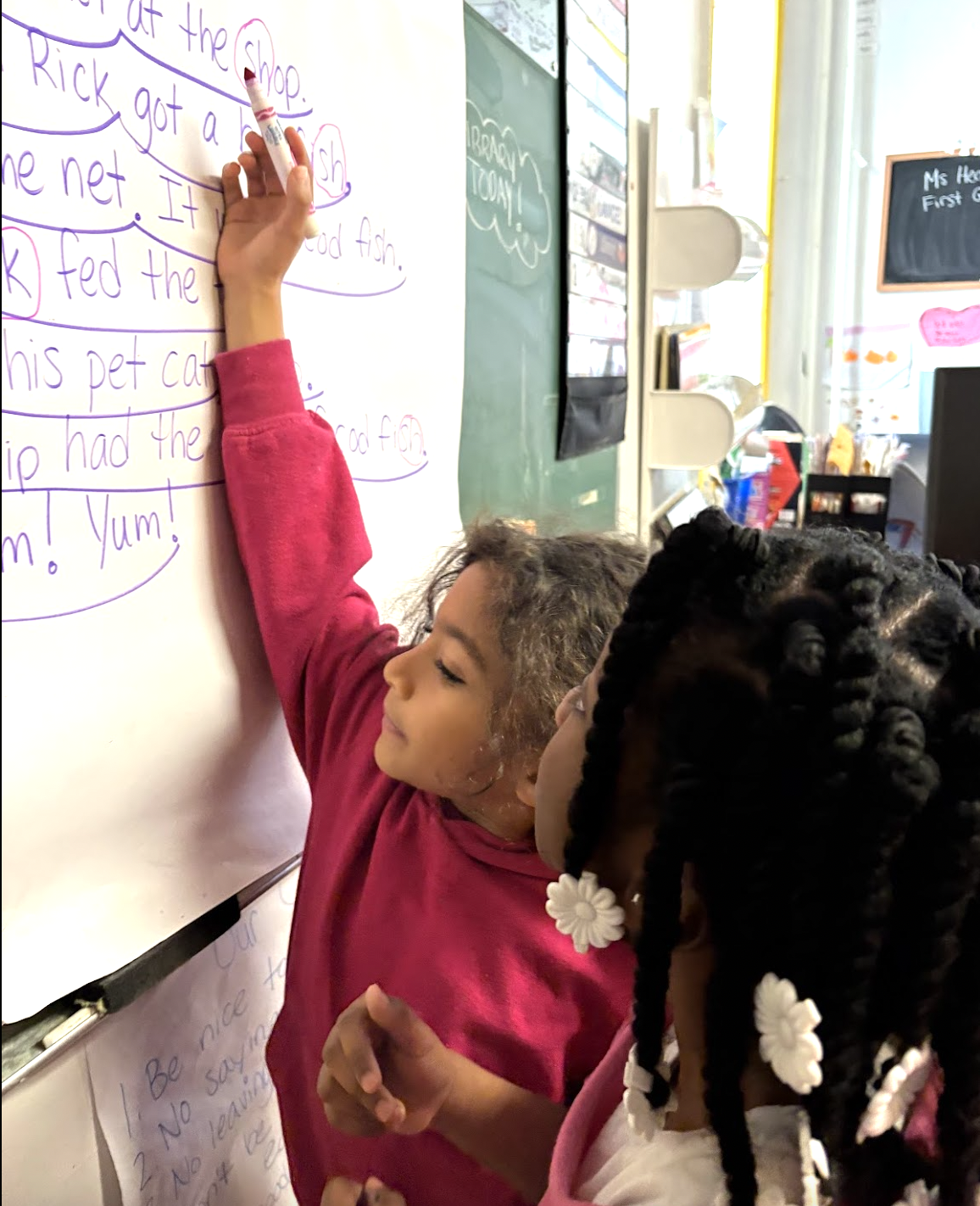
The goals for the language arts program derive from the mission of Jubilee, which is to build on the curiosity and enthusiasm for learning that children begin with while building a strong foundation of academic skills. Young children love books and are eager to learn to read. They also enjoy telling stories and like to see their words in written form. It is the goals of Jubilee’s language arts program to keep this love of books and desire for expression alive throughout and beyond the school years. The motivation to read is foundational to building reading skills. Building a sense that their words and ideas are important and have value and meaning in the world is foundation for students in learning writing skills.
Students learn reading skills in the context of experiencing the power of books to expand their horizons; bring pleasure, humor, compassion, insight and understanding to their lives; change their perspectives; build their imaginations; teach facts; pose questions; and enrich their lives. Students learn writing skills in the context of experiencing the power of writing to clarify and sharpen thoughts; to express ideas, questions, struggles, feelings and experiences; to tell stories; to build on the music of language; to records observations of how things are; and to relay visions of how things could be.
At Jubilee, skills are taught in context explicitly and sequentially. The importance of sequence and context are reflected in the language arts objectives.
Math
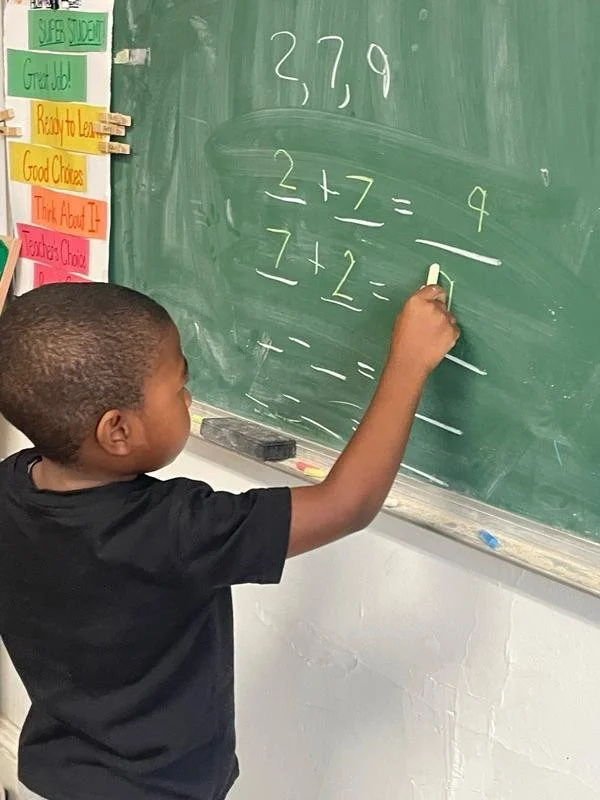
The goals for the math program at Jubilee are an extension of the mission for the school. They involve building on the resources children already have: curiosity, creativity, the desire to make sense of the world, reasoning and logic and the ability to apply knowledge in diverse areas to the learning of new concepts. Our approach is based on respect for working with children’s minds; respect for their capacity for grasping complex concepts through experience and intuition; respect for their innate curiosity and desire to learn; respect for their individuality of thought, abilities, and ways of learning; and respect for their life experiences and cultures.
Another aspect of our mission is to build a strong foundation of academic and social skills. The goal for building academic skills is reflected in our program objectives for math at each level. Social skills are built through the methods in which math is taught; by working in cooperative groups, respecting the insights and ideas of other students, and by perceiving math as relating to real life in such a way that it can be used as a tool to build a more just, equitable, and effective community.
Often in education the discovery method of learning is set against the explicit teaching of skills. At Jubilee there is a balance of both methods. Students are exposed to new concepts in problem solving situations, and are allowed to explore and come up with their own strategies. By the time they are taught a skill, they have built an intuitive understanding of the concept through exploration and individual insights. Explicit teaching of skills comes after a background of discovery.
Social Studies
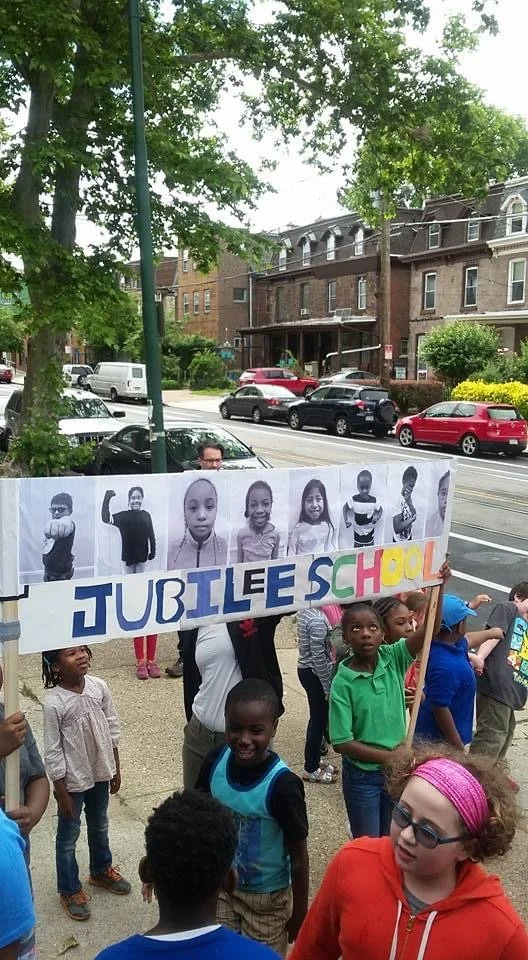
Social studies at Jubilee begin with an in-depth study of our own community and builds outward to encompass our city, county, and the world. We begin in the present context of our particular neighborhood and work our way backwards in time, ending up with ancient history. Our goals in social studies reflect our mission “to build in students a sense of hope and responsibility, and a knowledge of their power to affect change in our community around the world.” By focusing on the strengths, struggles, collective accomplishments, and richness of culture in the African American community, students can build a strong sense of identity and place in their history. Building on this foundation, they study communities with different cultures, from different time periods, and deal with different external and internal forces. Our studies are year long, in-depth, interdisciplinary units which focus on examining cause and effect relationships and the complex interaction of history, geography, politics and culture. By reflecting on both the past and present in different parts of the world, students are encouraged to imagine a future for the world they are inheriting.
Science
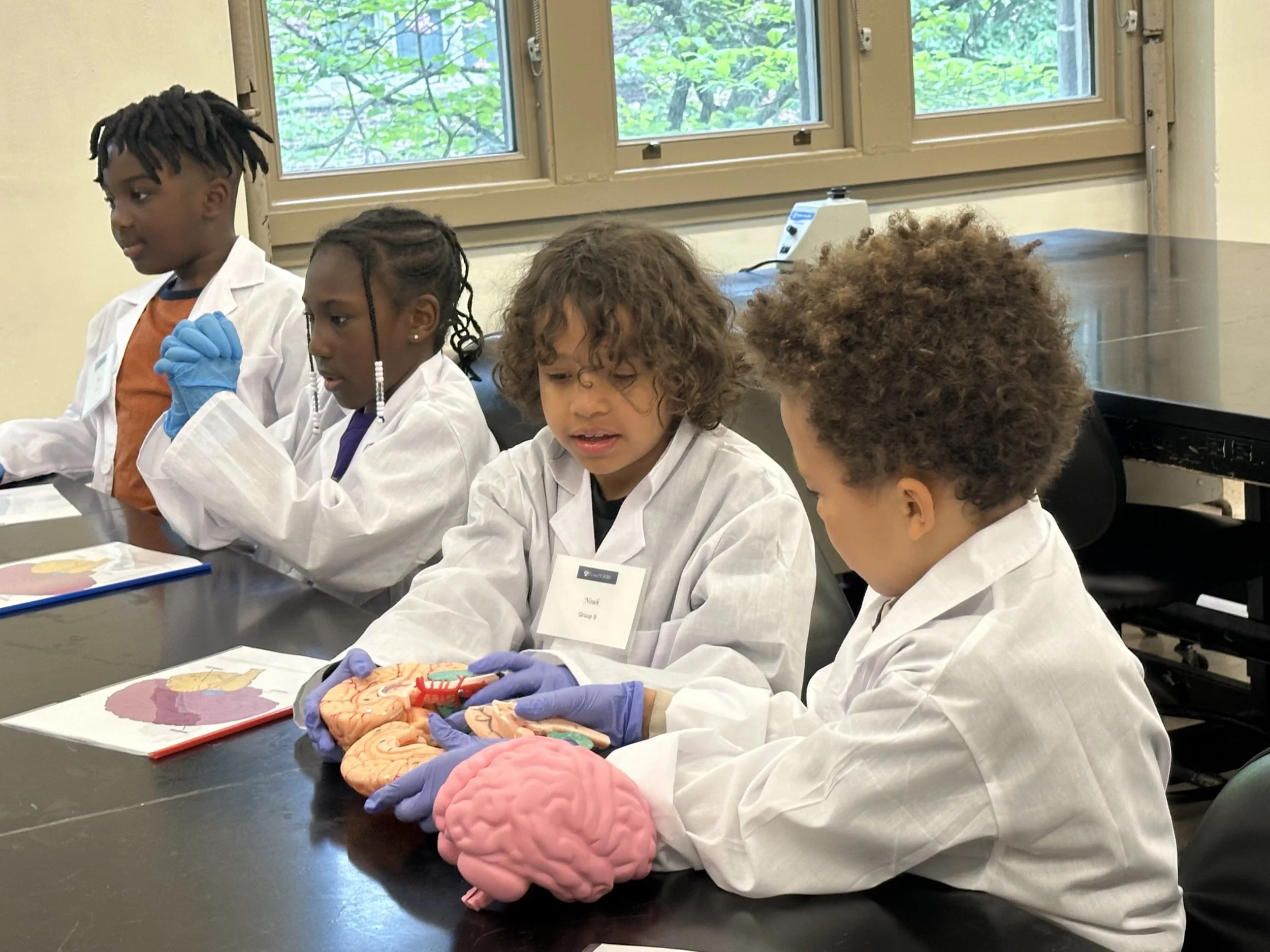
In science, as in other disciplines, the partnership of curiosity between students and teachers is a key to discovering patterns. Foundational to scientific thinking are awareness of the mysteries of nature and how things work, along with the desire for understanding and willingness to pay close attention through observation. From their earliest years children by nature have a scientific approach to the world. They notice and wonder about all kinds of things that adults have forgotten to notice and wonder about. They explore and investigate; and they are constantly experimenting. At Jubilee, our goal is to keep that scientific outlook alive, to learn from it and to build upon it. The questions of students and teachers guide scientific explorations. As students observe, record, question, make hypotheses and experiment, they begin to recognize patterns in scientific data which they can then apply to new questions and new hypotheses. The process involves uncovering information and concepts, and discovering the patterns that exist in nature and the world.